
October 2014
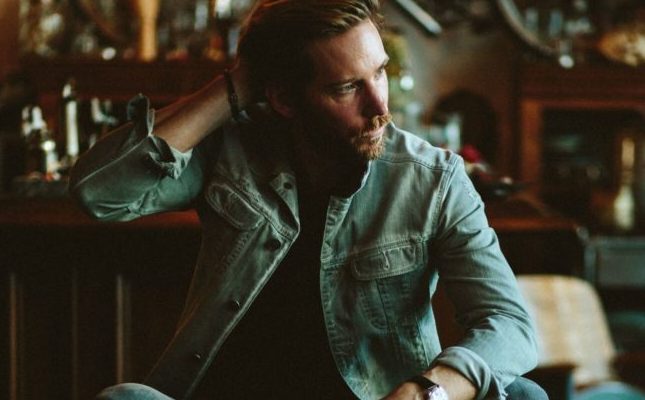
Mythos Live – a celebration of music across video games, television and film, conducted by Austin Wintory, the mastermind behind the music of Flow, Journey, and The Banner Saga. Having recently interviewed Austin via email, I was eager to meet him in person as part of New York’s Super Week. Little did I know Troy Baker would be his special guest. I’d just finished The Last of Us, and was profoundly impacted by Baker’s portrayal of Joel. The show was excellent, and afterwards, I waited in a small room in Carnegie Hall, surrounded by beautiful art, a cup of tea in hand. Soon, I spotted another familiar face, Darren Korb, the composer behind the wonderful music of Bastion, Transistor, and Pyre – who I’d also interviewed a few weeks prior. Through the strangest of circumstances and fate lining itself up, I found myself in deep conversation with Austin Wintory, Megan Wintory, Troy Baker, and Darren Korb. I was an 18-year-old freshman in college, surrounded by the creators I most admired. They invited me to a bar, though I regretfully had to inform them I was under 21. Handing Troy a napkin with my email address, I vowed that I would one day interview him to learn more about his creative drive.
August 2018
Life is strange. Having just graduated college after a tough but rewarding four-years, wrapped up with hugely successful senior year – I should have been in the best place of my life. Instead, searching for a career and attempting to design my life has been draining and deprived me of my creative drive. A friend gave me a simple piece of advice, “Do what you can with what you have.” Reflecting on that, I took a look back at some of the contacts in games, television, and film I’ve developed over five-years of running TheWayfaringDreamer. On a whim, I sent some cold emails – doing what I could with what I had. One was to Troy Baker’s talent agent, who responded the very next morning. Just like that, four long years later, 22-year-old Ian had fulfilled 18-year-old Ian’s promise of interviewing Troy Baker.
Where do ideas come from?
My intention speaking with Troy was to explore his creativity and his drive to tell stories. His work speaks for itself – he’s clearly one of the most prolific voice actors in the history of video games. What about the man behind the voices? The artist? Where does that creative inspiration come from?
“Rod Serling [Creator of Twilight Zone] did a talk with a TV special Writing for Television, answering the question, ‘Where do ideas come from?’ and he answers: ‘I don’t know, where do they come from? Ideas come from the Earth. They come from every human experience that you’ve either witnessed or have heard about, translated into your brain in your own sense of dialogue, in your own language form. Ideas are born from what is smelled, heard, seen, experienced, felt, emotionalized. Ideas are probably in the air, like little tiny items of ozone.’”
Baker continues, “The emotions we have that are connected with our experiences actualize in whatever form we chose to be creative in, whether it be writing, acting, painting, sculpting, et cetera. And I believe that life creates that inspiration inside of us.” Previously, I related my own creativity to shoes: I struggle to be creative without shoes on. Baker takes this a step further. “Like you said, you can’t be creative without having shoes on, you still have to seek out that pair of shoes, put them on, lace them up – you can’t expect those shoes to come to you.”
“I believe what enhances my creativity is whenever I seek out a place or a purpose of being creative and once I get into that place, whatever it may be, I accept and am open to what that creative process is. When I start trying to infuse myself into art, whether it be writing music, writing a script or story, or acting, that’s when the creative process stops. It’s when I sit back and listen to that creative inspiration, that unction which first propelled me into that creative place, that’s what feeds my creative drive. When I inject myself and my desires into it, that’s when it stops.”
Fear and faith

Imagine a pipe with water flowing through it. Now, replace water with creativity. Under certain conditions, the flow is unimpeded and pure. For Troy, this happens when he seeks out a creative purpose, and allows himself to be open to whatever process arises from that purpose. Just like a water pipe, however, there can exist blockages that impede the flow of creativity. Often, these blockages can come in the form of ego, desire, expectations, and fear. Baker’s creative flow is interrupted when he injects himself, his desires, his ego into his creativity. He believes that to be universally true when we put fear at the forefront of our creative process. “That can manifest in different ways,” he says. “It could be a refusal to act, period, like we just freeze up and don’t do anything. It could be to over exert ourselves and to be driven by a need or a desire to impress and prove. Or, it could be simply operating in a place that refuses to be what we thought it would be.”
“David Milch [Creator of Deadwood] said it best. He said that there are two fundamental motivations, especially for actors: fear and faith. And that his job as a creator is to create an environment that allows actors to circumnavigate that fear and operate in a place of faith. I think that whenever we operate in a place of fear, we stifle our own creative process, so I absolutely try to find that way to operate in a place of faith rather than a place of fear.”
Are there, then, strategies that can be deployed that help people transition from operating from a place of fear to a place of faith? Troy doesn’t think so. “I think strategy would formalize that too much and make it a process,” he tells me. “The second we start trying to process something that is inherently creative that becomes operating in a place of fear, because if we say ‘this is my process’ or ‘this is how I create’, inherently we remove that mystic quality about creating art that makes it art. We end up not being creative by means of trying to be creative.”
“If we can say: ‘There is no process to this, there is a desire and there is experience and there is training and a desire for me to be honest in whatever it is that we do’ then there doesn’t need to be a process. Someone once asked Richard Burton how he acted so well. He said, ‘It’s quite easy. I will give you everything, but if you give me nothing in return, I will take it from you.’ Again, I believe that to be universally true. An actor’s first position and responsibility is to give everything.”
The fabric of our being
My own Twitter bio says, “Engineer. Leader. Storyteller. Dreamer. I believe in people.” These are the words and phrases that define me down to my core. Being a storyteller, or rather, telling stories, is part of the fabric of my being. The reason I started TheWayfaringDreamer, the reason I interview people, is to tell a story. How fitting, then, that Troy Baker’s Twitter bio says simply, “Storyteller”.
We continue our conversation on Sir Richard Burton giving his everything. “There is a scene, a story that must be served and if all players are not equal in their desire and pursuit to serve, that scene or story must still eat. So Richard is in service, indentured servitude, to that story and will do whatever it takes to feed that story. I passionately get behind that because I believe that storytelling is what we are here to do.”
“Ever since we could walk upright, humans have been drawing on cave walls, trying to share in a common story. We’ve been creating a narrative for as long as there has been language, and in some ways, even before. In fact, the reason we created language was to tell stories. To tell people, ‘This is dangerous’. To tell people, ‘This is what I need’. To tell people, ‘This is what I want’. At our very genetic level, we are all storytellers. We each chose to tell our story in different ways, but the second we deny that storytelling is in our being, we deny ourselves.”
Your story matters
When I first started TheWayfaringDreamer, I met two amazing young men through Twitter: Caleb Cajthaml and Roger Pokorny. Together, they co-host a podcast called Bonus Points and create a lot of content in the gaming sphere. Last spring, Caleb unveiled a project called “Human: A Collection of Short Stories” consisting of seven short stories by several authors, centered on the question: “What makes us human?” It is a phenomenal examination of humanity, that I encourage folks to check out.
I oftentimes ponder the same question, and my answer to what makes us human is our ability to tell stories. Of course, this manifests differently in everyone, and not everyone even realizes they are a storyteller. Often, I see people on the street or at a restaurant or on a subway, and I just know they’ve got a story to tell. My mission is to ask the right questions to bring their inner storyteller out. Human beings are beautiful, intelligent, incredible creatures, and hearing their stories is remarkably rewarding.
However, there seems to be a pattern in society of stifling individual voices. Of encouraging folks to conform to the norm, to listen and not speak, or only speak when spoken to. That doesn’t sit well with Troy Baker.
“My wife and I just had our first child, and we’ve made a very conscious effort to not shush him, to not say ‘you’re okay’ when he’s crying,” Baker begins. “This came from advice some friends gave us, a strategy they used that really resonated with us. If our son is crying, there’s a reason. He’s either got a poopy diaper, he’s hungry, he’s tired, or he’s in pain.”
“If our natural position is to tell him, ‘Shh, be quiet, don’t talk to us, don’t tell us what’s bothering you, don’t talk to us about what your pain is, don’t feel free to express yourself’, then as he gets older, and he’s 16 and we go to him, ‘Why didn’t you tell us you were doing this?’ or ‘Why didn’t you tell us you were feeling this way?’, he’s going to say, ‘Because you trained me my entire life not to talk to you!’ And we’ve all done that. We’ve all grown up in a society that tells us to conform, to be quiet, listen and don’t speak. Paint by numbers and stifle your creativity. We’ve all got a story to tell, and we’re trying to find out how to tell it. Am I going to pick up a pen, a guitar, a paintbrush? How am I going to tell my story? We need to be able to express ourselves free from the constraints and confines of these preconceived notions.”
What you can with what you have
It was past midnight on a Monday and I was staring at my email hoping for a response from one of the hundreds of jobs I’ve applied to since graduating college. Feeling very down, I reflected on a piece of advice a friend gave me: “Do what you can with what you have.” Halfheartedly, I glanced at TheWayfaringDreamer’s email account – the last email I’d sent was in November of 2017. Doing what I can with what I had, I sent some emails out, expecting very little in terms of responses. One was to Troy Baker’s agent, who responded the next morning informing me that Troy was available for an interview the following week. That one piece of advice had empowered me to be more creative, to want to tell more stories – it had invoked a sense of hope.
I relay this story to Troy, who responds, “I would take that a step further, because you’re in the place now to allow this to become part of your DNA, allow it to evolve a little bit. Do what you can with what you have, and if it’s not enough, go get more. We have to constantly be stretching ourselves and exposing ourselves to new things.”
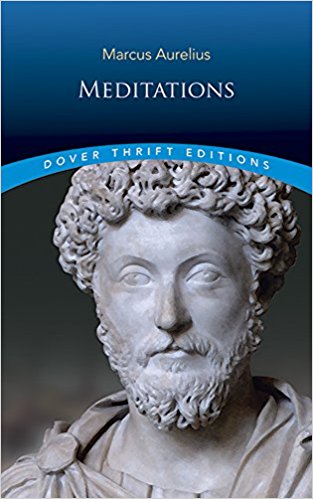
We all go through periods of great friction in our lives. Where we don’t quite have the answers. Where we don’t know where we’re headed on our journey. Sometimes, our guide through these times are quotes like “Do what you can with what you have.” Quotes, maxims, quips – these can be extremely powerful tools. One such work filled with those sorts of maxims is Marcus Aurelius’s Meditations, which Baker has been pouring over for the past several months.
“I started in March and I’m still reading it. My version is 99 pages, and I’m only a third of the way through. It is beat up, it is highlighted, it is dog eared, it is a book that is thoroughly used. Marcus says, ‘Do not be satisfied with the surface knowledge of any book.’ This is a work that needs to be dissected and studied and read with great scrutiny.”
“One notion I read yesterday was that, whatever a doctor prescribes us, we will take without question. The doctor may say, ‘This is going to taste bad,’ or ‘This might hurt a little bit,’ but we don’t question it because we understand that it is for our benefit and our health. If we could look at the circumstances of our lives as prescriptions that are for our health, how much easier is that for us to take? To say, this circumstance right now is happening to me, but it’s just like a pill or a shot or an ointment. It may have to hurt before it helps.”
He continues, “That is exactly what life does to us, and I believe that once we accept that and dive into it, ready to jump into the lane of wherever the river of life is leading us, we will find the strength and desire to do more. But you have to first exert that effort in order to get to that place.”
Fatherhood
Troy Baker recently became a father, and his journey into fatherhood has profoundly affected him. “There is nothing I do now that is without purpose. I have lived my life for me; I have lived 42 years for me. Now, I live my life for him. There is much more required of me, and nothing required of him. I’m aiming for more than just success, more than just fulfillment. Sure, my child will gain great benefits from those things, but being a father transcends those things.”
“I was a grown, drinking adult when my father was 42, so I am leaps and bounds older than where my father was when I was born. So it is on me, the onus is on me to be healthier than he was, to be more available than he was, to be more supportive than he was, to be more present than he was. That’s the goal of every generation – to be more than the last.”
“Being a father has impacted me unilaterally, profoundly, fundamentally, in every cliche way you can imagine, and then some. Let me put it this way: there’s nothing that I’m watching right now that is truly amazing to me anymore. I was that guy that would say, ‘Oh my gosh, you have to watch this, your life will not be complete if you’re not watching this show!’ And now I’m like, ‘Yeah, it’s okay.’”
“Everything has been put into perspective. When you get to watch a human life and their systems come online right in front of you, it’s awesome. It’s like, ‘Your eyes were moving in different directions yesterday and now today they’re locked!’ I saw that ability that we take for granted come online right before my eyes! This is amazing! But even the greatest plot points in Westworld have become just… good. I’m taking back the truest meanings of words like awesome, and amazing and incredible.”
“I’m much more careful about love, and making sure I remove the word ‘hate’ from my life. I don’t want any hate in me. A lot of what Marcus Aurelius talks about is to no longer be driven by passions. To be able to calmly, rationally and logically guide your steps based on the principle that there is a natural order to life and the universe and to be in harmony with that. Those ruling principles should be guiding our every action. To me, that is what’s really guiding me right now.”
Remembering Troy Baker
Game of Thrones’s Beric Dondarrion said powerfully, “Death is the enemy – the first enemy and the last.” As humans, we are mortal. We only have so much time with which we can create, explore, discover, love, and tell stories. We will all die, and we will all be remembered differently, if at all.
“I remember traveling in Kilkenny, Ireland with my wife. We were exploring this town, and you know, in the fourteenth, fifteenth and sixteenth centuries, clergical life was at the center of every town. The biggest building in every town was the church. You could tell who was the most notable in the village/town/city by where they were buried. The most affluent and influential people were buried inside the church, and then the proximity of your burial plot to the church was an indication of your societal status.”

“We were exploring this cemetery – I love cemeteries and the quiet, silent poetry that they present. I was looking at these monolithic tombstones that over time, have just become boulders in the ground. Tombstones are supposed to hold your name and your greatest accomplishments. When you looked at these tombstones, they have been weathered with time, the elements, the salt in the air, they have bird shit on them, people have written on them. Whatever that person’s name and greatest achievement was has been wiped clean by both nature and man.”
“To me, that represented a fundamental shift in my view on legacy. My accomplishments could be erected in stone, or as a statue or a painting, but unless somebody remembers it, it means nothing. The things I have done will be forgotten, and the people who forget will also be forgotten. So every person’s life is sufficient. The life that I am given is enough. The life that I am given today could be my last. I should make the most of it. If this is my life, then my life is sufficient.”
“It’s not so much about, will they remember me, because even the people that do remember me will be forgotten. To me, legacy is what we can give to the generational trust so that whatever goodness, whatever success, whatever weath, whatever wisdom that I am able to procure in my life, I leave for my son. And that he adds to it, so by the end of his life, the wealth and wisdom and success he’s garnered in his life has grown exponentially based on mine, and he hands that off to his children. Legacy is not awards, accolades, statues and being remembered. I don’t need to be remembered by the world. I just need to be remembered by one, so they can be remembered by one, and so on.”